
Finding Mauldin Residents by Record Type
Begin with a precise question. Greenville County's assessment record is useful for an owner or parcel, while a deed records a transfer or other land interest. A court index may help distinguish people with the same name, but a court hit does not prove present residence. The voter system has its own access rules, and a historical household is often best approached through directories, newspapers, or the South Carolina Room. Treat a Mauldin residents directory as a set of linked evidence, not a single master list.
Ownership, mailing address, and occupancy are different facts. The county property result may supply a situs address, tax map number, legal description, and an owner mailing address. It does not identify every household member, renter, utility customer, or delivery recipient. For a previous household, pair the public property trail with a dated directory or census source instead of projecting a current record backward.
- Search Greenville County Real Property Search by the name, street, map number, subdivision, or sales sheet that you already have.
- Save the map number and compare the situs and mailing fields before treating an owner of record as a household lead.
- Use Register of Deeds search routes to follow the party names, book references, and legal description.
- For a past Mauldin household, ask the Greenville County Library System's South Carolina Room about directories, microfilm, maps, and newspapers.
- When the needed City-created record is not online, make a narrow written request to the City Clerk under the South Carolina FOIA.
Note: Keep the source, date, and field values together so a later check can show what the record actually established.
Mauldin Resident Record Custodians
Mauldin sits in Greenville County, so the core land and court trail starts with county custodians rather than City Hall. The Register of Deeds keeps recorded land instruments. Real Property Services maintains the assessment record and its searchable parcel routes. The State Election Commission supplies voter services and describes voter-list access. City offices matter when the sought record was made by the City, such as a permit, plan, code file, or municipal-court matter. For a full address sequence, use the Mauldin by-street page.
Greenville County Register of Deeds
301 University Ridge, Suite S-2100
Greenville, SC
864-467-7240
ROD records and copy routes
Greenville County Real Property Services
County assessment-roll custodian
Greenville County, SC
864-467-7300
Real Property Search
South Carolina Election Commission
Statewide voter-service channel
Greenville County route for Mauldin voters
Use county-office contacts through MySCVotes
MySCVotes voter services
Mauldin Property Search Clues
The county property search is the practical first stop when an address or likely owner is known. It is free and presents one search route at a time. The visible tax-year menu includes 1995 through 2027 plus special values and ALL, but that display does not promise that every field is equally complete in every year. A Mauldin query should be checked in the GIS map because the portal is countywide and a postal label alone does not settle city jurisdiction.
The property-search entry screen allows a tax year plus one criterion. Its documented routes are name, street, map number, subdivision, sales sheet, and a separate voided-card map-number route. The returned map number is the useful bridge to plats, GIS, and the deed trail.
| Property-search control | Use for a Mauldin record | Limit |
|---|---|---|
| Tax year | Choose the displayed assessment year | Not a guarantee of unchanged historical fields |
| Name or street | Start with one known person or address | Only one field may be searched at once |
| Map number | Link a parcel to map and deed work | It is a parcel identifier, not a household list |
| Subdivision or sales sheet | Narrow a known development or sale record | Works only when locally recorded consistently |
The Greenville County property search is shown below. It is a starting screen, so preserve the tax year and search route before drawing conclusions from a later property card.
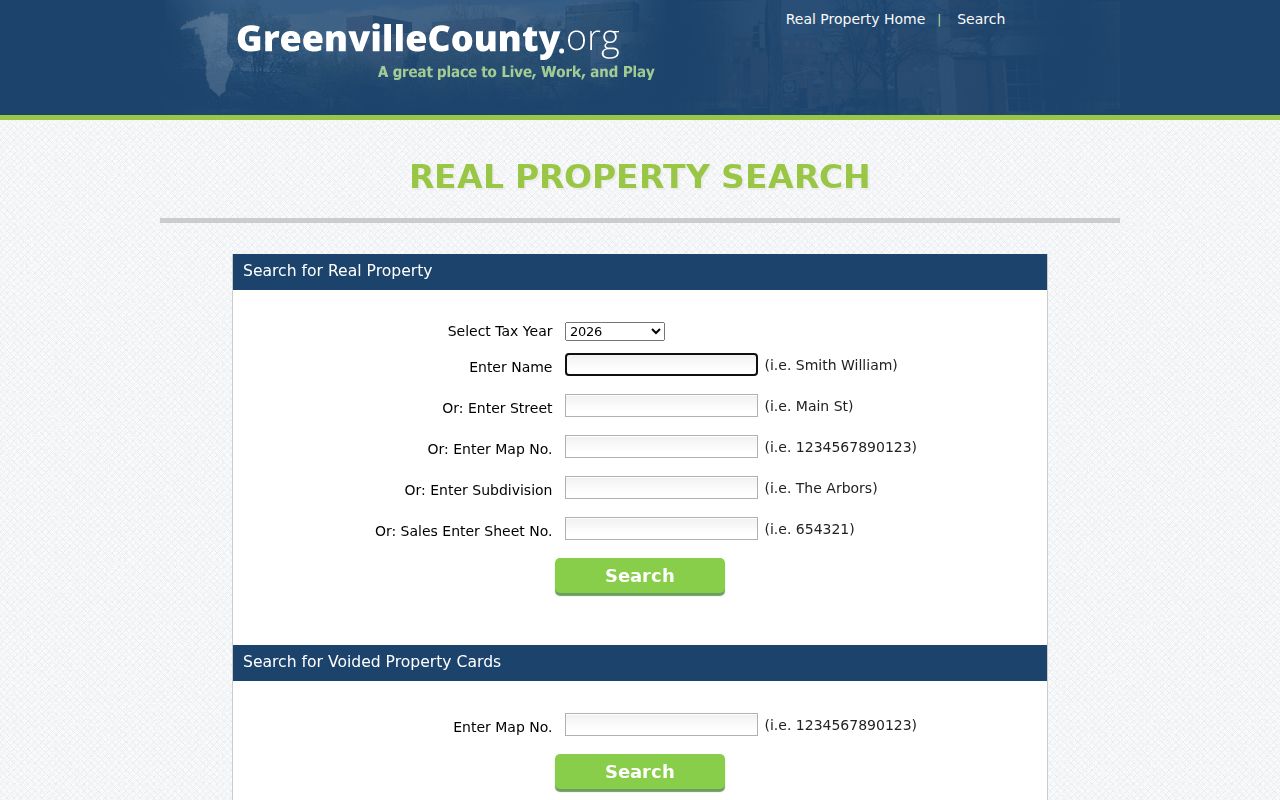
Use the displayed choices to build a parcel trail, then verify the result against GIS or recorded documents.
Mauldin Voter Records Have Clear Limits
MySCVotes serves an individual voter’s registration, polling-place, sample-ballot, and voting-history needs. It is not an open block-by-block resident directory. South Carolina's separate voter-list process describes fields and participation history, while ballot choices remain private. A registration-related result should be treated as a limited confirmation, not an invitation to assemble a profile of a household.
A voter-file request is also subject to the State's use rules. South Carolina Code Section 30-2-50 restricts knowingly obtaining or using personal information from state or local agencies for commercial solicitation directed to a South Carolina person. Protected addresses and confidentiality rules can narrow what is available. The Election Commission's voter-list guidance explains the official channel.
The MySCVotes service is shown here as the voter-services entry point for a Mauldin residents directory search.
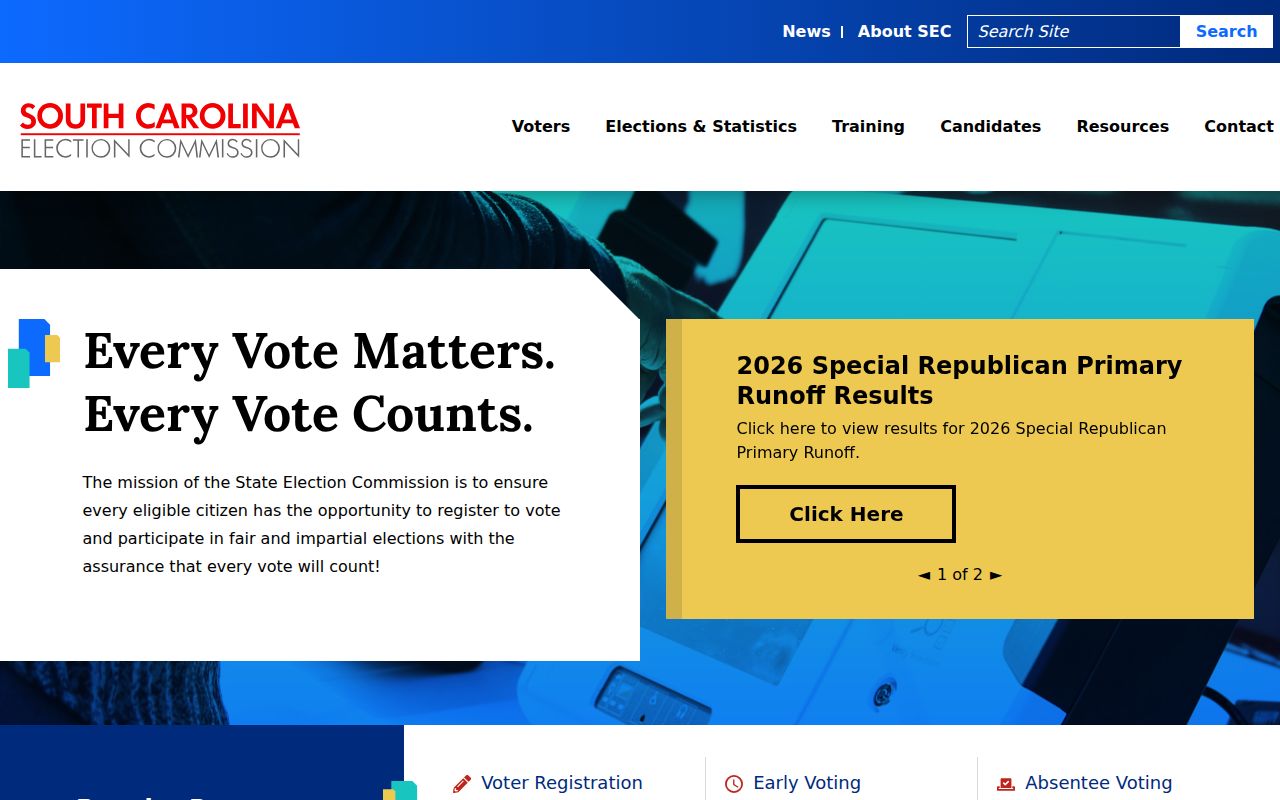
Use the official service for its stated purpose, and do not confuse participation history with how anyone voted.
Mauldin Deeds Connect Parcels and Names
The Greenville County Register of Deeds is a recorded-document index, not an address lookup. Its search materials describe a pre-1985 lane for index books, deeds, land grants, and some mortgages, and an after-1985 lane for deeds, plats, mortgages, powers of attorney, liens, and other recorded documents. The registered-user system describes 1985-present searching, while the County also supplies earlier book and index routes. The method changes with the era.
Start with the owner name or legal description supplied by Real Property Services, then follow grantor and grantee names, book and page or instrument references, and matching legal descriptions. The ROD advises researchers not to rely on later subcategories for pre-1990 material. It cannot provide legal advice or conduct a title search. For a certified evidentiary copy, use the office's copy route instead of a printed screen.
Greenville County's Register of Deeds is the official office behind this document trail.
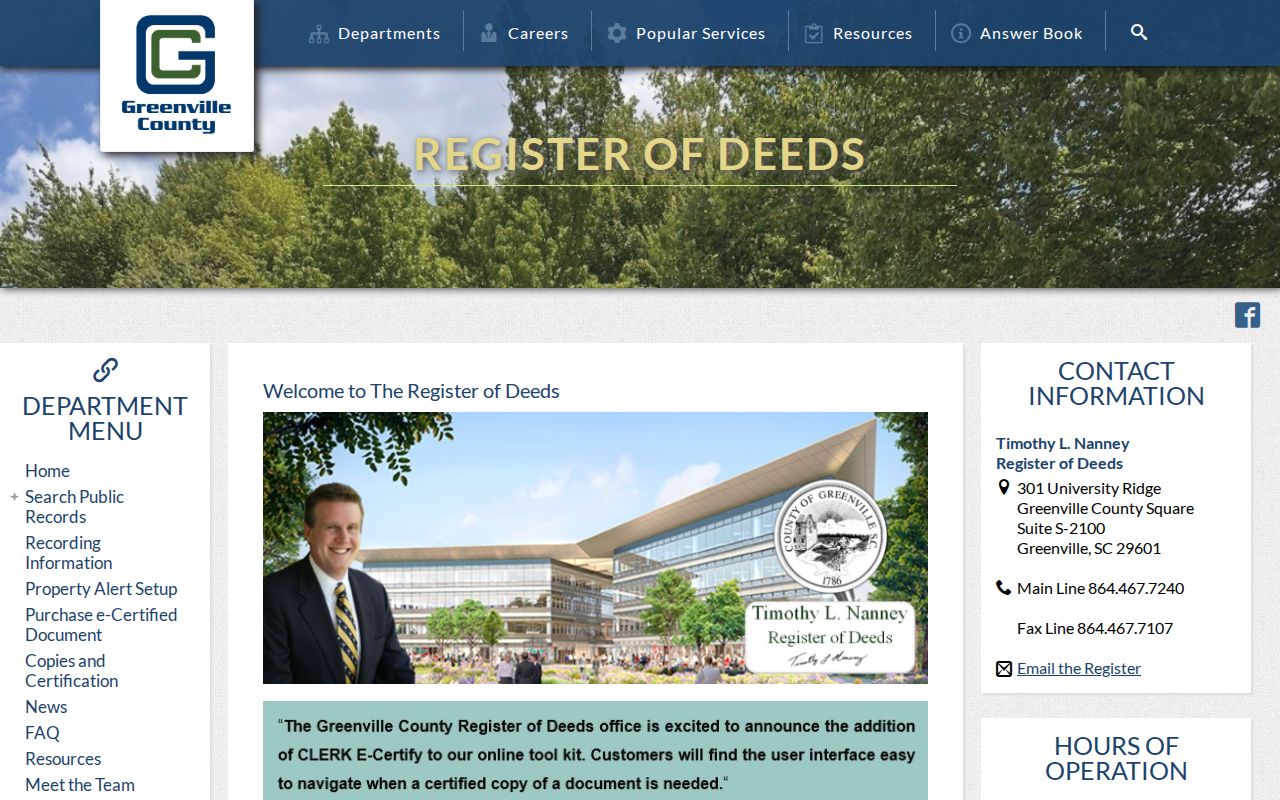
Recorded title can show an ownership transaction or interest, but it does not establish present physical occupancy at a Mauldin address.
Mauldin Court Names Need Verification
The Greenville County Trial Court Public Index is the county starting point for Common Pleas, General Sessions, and public Family Court material. The State guide says users select Greenville County, accept the county notice, and should begin with one or two criteria because supplied filters are combined. A case number, partial last name using Contains, party type, action type, date range, tax map number, court, and case type are documented search controls.
Result screens can lead to a case number, party and case-type context, chronological actions, financials, and documents where an icon is available. Civil images are generally available online, while General Sessions searches display file information online. Sealed cases, juvenile material, adoptions, dismissed warrants, and other protected records remain restricted. Confirm a full name or initials, case number, date, and category before asking the Clerk about a public file.
The South Carolina Judicial Branch gateway leads to the court system and its official public-index guidance.
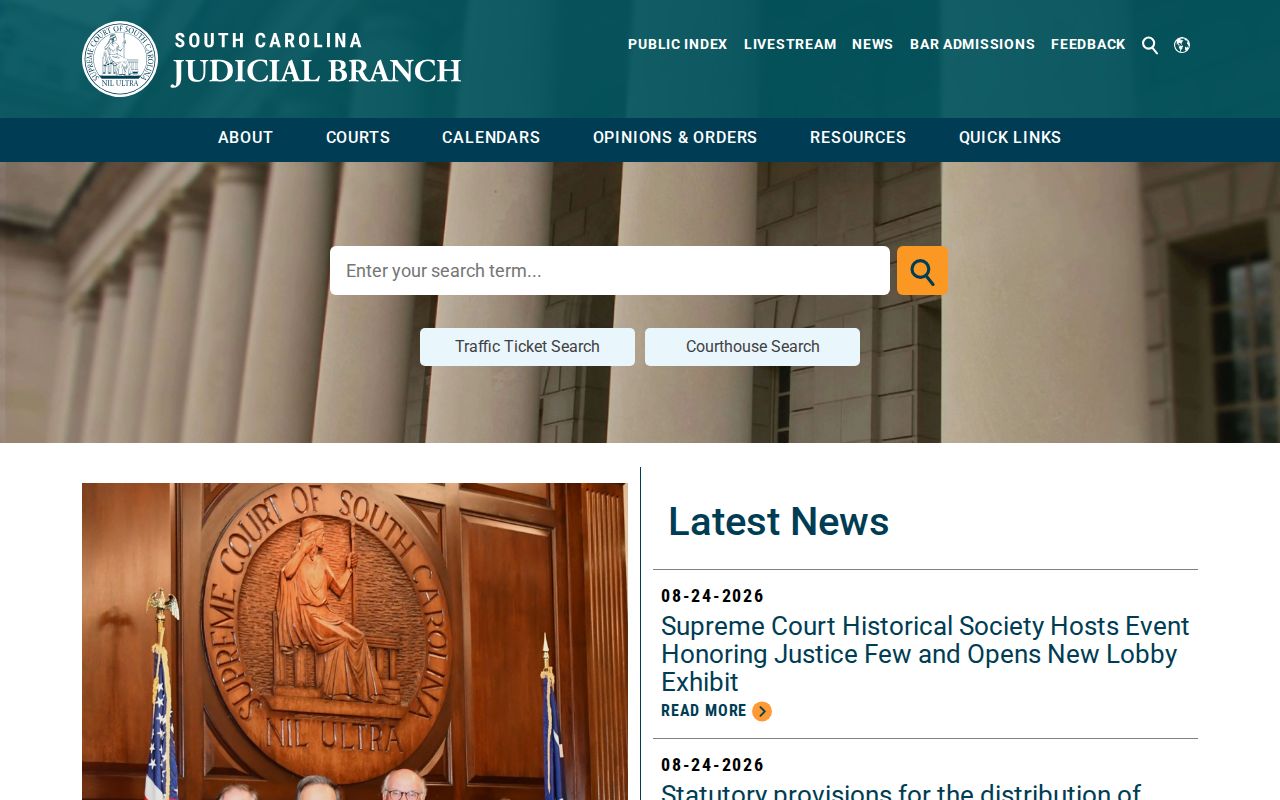
When an online result matters, the Greenville County Clerk provides inspection and copy routes, including older off-site files after request.
Current Mauldin Resident Directory Sources
A Mauldin residents directory may draw on several public sources, but each answers a narrower question. The city government directory lists officials and departments, not households. The assessment roll identifies an owner of record and parcel details. Recorded instruments identify document parties. Voter data follows state rules. Community and business listings may identify an organization contact, but neither proves a private home address.
| Source | Who It Lists | Keeper | Access |
|---|---|---|---|
| Real Property Search | Owners of record and parcels | Greenville County | Free county search |
| MySCVotes services | Individual registration services | State Election Commission | Defined state access route |
| ROD index | Parties to deeds, plats, liens | Greenville County ROD | Online and counter routes |
| Mauldin government directory | City offices and officials | City of Mauldin | Free online |
| Chamber directory | Participating businesses | Mauldin Chamber | Organization directory |
For one specific name, the Mauldin resident lookup route keeps the property, court, probate, vital, and voter paths separate. That distinction avoids treating any one list as a current-resident verdict.
Mauldin FOIA Follows the Custodian
When a City-created permit, plan, certificate of occupancy, code file, minute, or similar record is not in a public interface, the City Clerk is the correct next contact. Mauldin says a Freedom of Information Act request must be written and may be submitted in person, by mail, or by email. The City normally has 10 working days to state availability, or 20 working days for material more than 24 months old, and may request a 25 percent estimated-cost deposit before retrieval.
The City's media and FOIA procedure directs a requestor to describe the record as precisely as possible. Its current form offers routing for Fire, Law Enforcement, Building Codes, Zoning Code, or Other, plus inspection, mail, pickup, fax, email, or other delivery choices. It is better to request a defined record and date range than to ask the City to create a general residents list. City records are still subject to exemptions and redaction under South Carolina Code Title 30, Chapter 4.
Mauldin Municipal Court Is Limited
Mauldin Municipal Court handles City criminal, traffic, and ordinance matters within its limited jurisdiction. Its public information route points case questions to the Greenville County Public Index, while copies and restricted-record questions belong with the court or clerk. The City lists the counter at 5 E. Butler Road and says its maximum penalty is a $500 fine or 30 days of imprisonment. That scope matters: a municipal-court name entry is not a directory listing or proof of current address.
The Mauldin Municipal Court page supplies the official local court contact and index route.
Sensitive, sealed, and otherwise restricted material does not become public simply because a court's party index can be searched.
Mauldin Custody Records Are Not Directories
The Greenville County detention search and the South Carolina Department of Corrections locator concern custody, not residency. The County entry was difficult to inspect during the source review, so no live search-field claim should be made from it. The State locator is limited to people in custody as of the prior midnight and excludes county detention, juveniles, parole or probation, fugitives, and released people. Use either source only for its stated official purpose and preserve the search date.
The Greenville County detention entry is shown below, but its public interface should be checked live before relying on any feature.
The county entry is a custody channel, not evidence that a person resides in Mauldin.
The SLED registry entry is a separate state system with its own access controls and required CAPTCHA.
Neither an offender registry nor a custody locator should be used to fill gaps left by property, voter, or directory records.
Mauldin Name Searches Beyond an Address
Some statewide tools can verify a narrow connection without being a person locator. The Secretary of State's entity search can show a filing or registered-agent record, but general partnerships and sole proprietorships do not file there, and Good Standing does not prove an active business. The State Treasurer's unclaimed-property service is free for a person or heir checking a claim. Both tools require a result to be read for its actual scope, not turned into a residence conclusion.
The South Carolina business-entity search is the official filing gateway.
An entity filing can document an organization connection, while a private residential address needs its own appropriate public record.
The State Treasurer's unclaimed-property program offers the claim search without a fee.
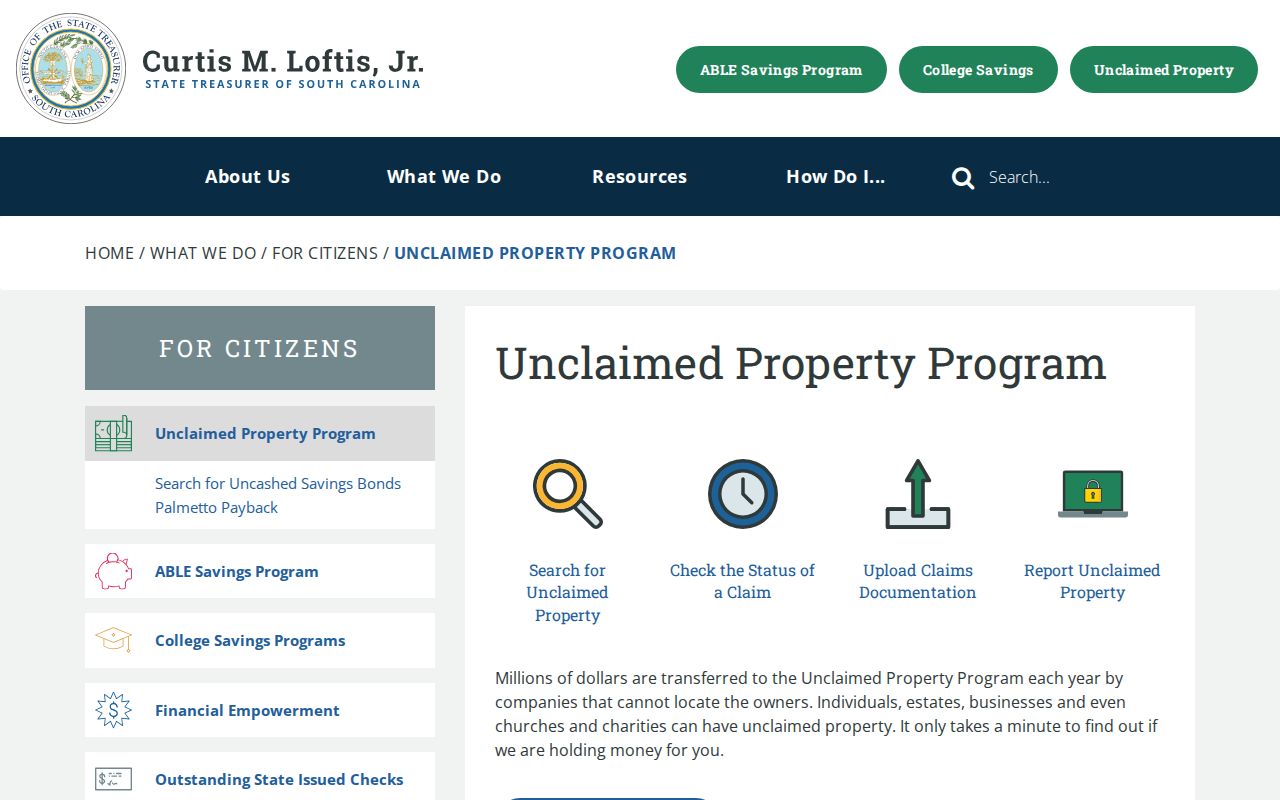
Use the Treasurer's official route for a claim, not as a substitute for a Mauldin resident record.
Historical Mauldin Resident Directory Collections
Historical directories for the Mauldin area are regional Greenville collections rather than a separately verified Mauldin-only run. Greenville County Historical Society reports city-directory holdings from 1883. The Greenville County Library System catalog identifies Hill Directory Company volumes at Hughes Main for 1931, 1933, 1935, 1938, 1940-1965 with gaps, 1967-1974, and selected archive issues through 1980. Polk material bridges later years, including a catalogued 1997-current run.
The South Carolina Room is the first local-history contact for directory volumes, microform, maps, newspapers, family files, and research computers. It asks visitors to arrange an appointment and lists scroominfo@greenvillelibrary.org and 864-527-9212. Historical directories can place a person or household at an address in the printed year. They do not establish present residence, and no readable primary Mauldin directory entry was verified online during the research. The Mauldin city-directories collection page gives the fuller shelf-by-shelf method.
Mauldin's Butler's Crossroads Record Trap
Older material may use a place name that does not look like Mauldin at first. City history traces the locality through Butler's Corners and Butler's Crossroads, records a town charter in 1890, reincorporation in 1910, charter revocation in 1932, reincorporation in 1957, and city status in 1969. Search Mauldin, Butler's Crossroads, Butler's Corners, and Greenville County when an older person or property trail goes cold.
The inactive municipal charter period is not proof that a household disappeared. It means a City record may be unavailable while county deeds, probate papers, directories, census schedules, newspapers, and archival collections remain useful. The City's Mauldin history gives the date and place-name context for checking an older record label.
- Roll
- A list maintained for a defined public purpose, never a complete census of every household.
- Index
- A finding aid that points to records or document parties and may not contain the full record image.
- Criss-cross directory
- A reverse directory arranged by address, useful for a household in its printed year.
- Parcel
- A mapped piece of land identified by a tax map number and tied to a legal description.
Mauldin ZIP Labels and Parcel Lines
A Mauldin mailing label does not settle municipal jurisdiction. The City uses 29662, and its survey material also shows respondents using 29607, 29681, and 29605. The research supports a cautious approach: use USPS ZIP Code Lookup for a specific delivery address, then use county GIS and the parcel record for city and tax geography. Do not describe the survey ZIPs as a complete postal directory.
No inspected county core-record portal shows a ZIP field. Real Property Search uses tax year, name, street, map number, subdivision, and sales sheet. The ROD is party and document oriented. Greenville County E-911 assigns physical addresses, while the mailing address can differ from the property's situs. Keep the ZIP, situs, map number, and legal description as separate notes when a Mauldin search crosses a boundary.
Mauldin Record Privacy and Safe Use
Official records can be useful for family history, estate work, civic transparency, reconnecting, and checking a documented property trail. They cannot reveal every resident. Utility and delivery accounts are not public lists. Motor-vehicle address information has federal protection. Courts and agencies may withhold or redact confidential material. South Carolina's Address Confidentiality Program, under Section 16-25-130, lets qualifying participants use a designated address through the Attorney General's program.
| Official record route | Commercial people-finder category | Practical difference |
|---|---|---|
| Named custodian, stated record scope | Compiled data from multiple sources | Read the record and its date, not a profile summary |
| Correction or confidentiality request goes to the keeper | Removal follows each business's process | One change does not erase every source |
| Copy or inspection rules are public | Access and accuracy can vary | Use the originating record for verification |
South Carolina's FOIA permits access to nonexempt public records but also requires the protection of exempt personal information. A narrow correction, redaction, or safety request should go through the exact agency that holds the record. The State's anti-stalking and harassment provisions remain in force whether information originated in a public index or elsewhere.